

Shopping looks different in 2025. Consumer shopping trends show that people aren’t just walking into department stores; they’re scrolling, clicking, checking reviews, and watching creator content before they buy. The lines between online and offline are gone. What matters now is convenience, connection, and experience.
To stay competitive, they’re teaming up with brands, creators, and platforms that already own shopper attention. This shift isn’t a trend; it’s a response to how consumers actually shop.
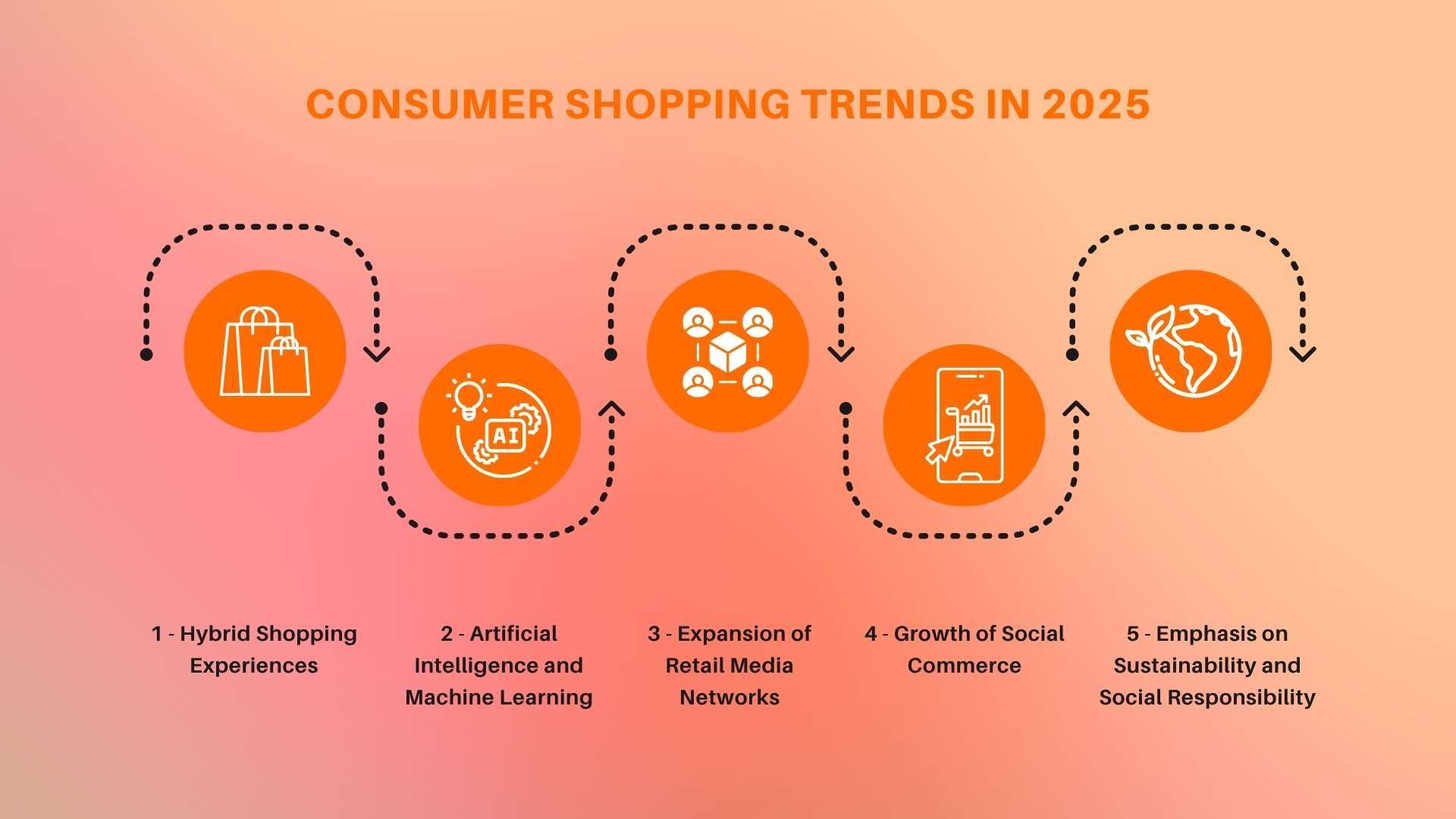
Consumer Shopping Trends in 2025
Understanding what shapes consumer behavior is key to staying competitive. Charm.io breaks this down further in their latest report, highlighting the Top 5 Consumer Retail Industry Trends in 2025. Below is a summary of the trends that are shifting how shoppers discover, evaluate, and buy products today.
Hybrid Shopping Experiences
Shoppers want flexibility. They’ll research a product online, buy it in-store, or order it in-app and pick it up curbside. Department stores need to deliver seamless transitions across every channel, or risk losing customers to those who do.
Artificial Intelligence and Machine Learning
AI helps retailers make smarter moves faster. From personalizing product recommendations to optimizing pricing and managing inventory, machine learning isn’t optional anymore. It’s the backbone of efficiency and relevance.
Expansion of Retail Media Networks
Marketplaces are turning their ecommerce platforms into ad networks. Amazon, Walmart, and Target allow brands to bid for premium placement, sponsor product listings, and engage with targeted shoppers in real time.That means brands can now reach shoppers directly while they browse. It’s targeted, high-intent, and gives department stores a new way to monetize traffic.
Growth of Social Commerce
TikTok has transformed from a source of entertainment into a direct shopping channel where discovery and purchase happen instantly. For department stores, the challenge is no longer just having an online presence, but meeting consumers inside the platforms such as TikTok, where they already spend their time.
TikTok Shop has become a high-stakes channel where brands that understand performance and trends are winning.
By analyzing TikTok Shop revenue at the product, shop, and category level, stores can see what is selling, identify gaps in their assortment, and adjust product strategies based on real demand. They can also spot trending products and track hashtag data to anticipate shifts in consumer interest before competitors move in.
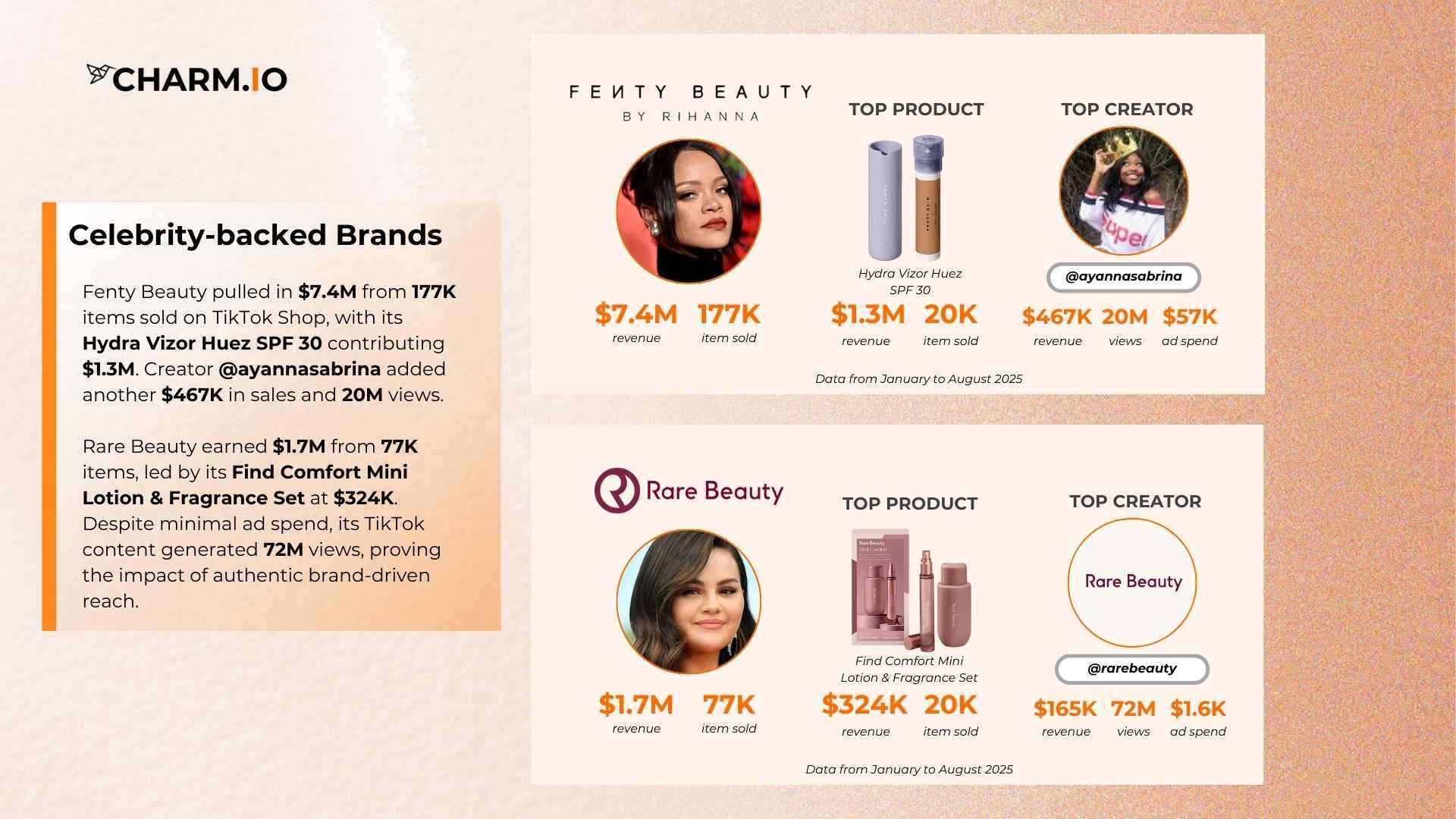
For example, celebrity beauty brands like Fenty Beauty and Rare Beauty have all leveraged TikTok Shop to capture viral demand, proving how quickly social-driven trends translate into measurable sales.
Charm data shows, from January to August 2025, Fenty Beauty generated $7.4M in revenue and sold 177K items on TikTok Shop. Its top product, the Hydra Vizor Huez SPF 30, alone brought in $1.3M from 20K units sold, while creator partnerships like @ayannasabrina drove $467K in sales and over 20M views.
Similarly, Rare Beauty earned $1.7M in revenue with 77K items sold, led by the Find Comfort Mini Lotion & Fragrance Set, which generated $324K from 20K units sold. Even with modest ad spend, Rare Beauty’s TikTok account drove 72M views, underscoring the reach of authentic brand-led content.
With this data, stores aren’t just reacting to viral products, they’re positioned to anticipate demand and lead conversations that convert directly into sales.
Emphasis on Sustainability and Social Responsibility
Today’s shoppers care about more than price. They want transparency, values, and accountability. Brands—and, by extension, the department stores that stock them—need to show where they stand on sustainability and social issues.
How Retailers are Optimizing for Revenue
Ecommerce and shifting expectations have pushed department stores to think differently. And brand partnerships are leading the way.
Collaborations That Keep Stores Relevant
Large retailers are teaming up with rising and established DTC brands to refresh their image and pull traffic. These collabs offer limited-time collections, exclusive drops, and social-worthy experiences that drive urgency and repeat visits.
Launching Marketplaces to Drive More Online Sales
Retailers are turning to the marketplace model to mirror the way people shop online by comparing options, browsing wide assortments, and discovering new brands in one place. Rather than relying solely on their own inventory, major stores are opening their platforms to direct-to-consumer brands.
This not only widens product choice but also strengthens partnerships with the brands customers are already excited about. The result is more traffic, higher sales, and stronger customer loyalty.
Shopping Becomes an Experience
Retail spaces are no longer just for transactions, they’re becoming destinations. From interactive displays and in-store technology to curated pop-ups and live events, shopping is now designed to be immersive.
The aim is to create moments that keep customers coming back, not only to purchase but to engage, explore, and be entertained. By blending retail with experience, stores turn visits into something memorable and shareable.
Pop-Ups That Drive Buzz
Short-term retail spaces are proving to be powerful revenue tools. Pop-ups let retailers experiment with new brands, attract new audiences, and generate excitement that traditional stores can’t always achieve.
The limited-time nature of these shops creates a sense of urgency, while exclusive products or collaborations spark conversation both in-store and online. More than just sales drivers, pop-ups act as marketing events that extend a retailer’s reach and reputation.
Data-Backed Collabs With Staying Power
To win long-term, large retailers and department stores are leaning into data. Tools like AI and platforms like Charm.io help retailers understand what shoppers want by tracking growth, engagement, and category demand.
This data helps pick better brand partners, build smarter assortments, and time activations for maximum impact. It’s how stores stay ahead without guessing.
Retailers That Adapt Are the Ones Winning
Large retailers and department stores aren’t dying, they are transforming. By aligning with how people actually shop, and using data to inform every move, these retailers are writing their next chapter. Brand collabs, social commerce, AI-driven assortments are all tools to stay relevant in a noisy, fast-moving market.
And with platforms like Charm.io, department stores can track trends (based on real revenue as well as social reach) and find high-growth DTC brands and products that would be a good fit to offer on their store. Retail isn’t about shelf space anymore. It’s about mindshare. And department stores that get this are the ones that will win.
Get further insights into brands in any ecommerce category when you book a call with Charm.io today.
Have questions about Charm? Attend our upcoming Charm 101 webinar to hear from our Customer Success Managers about how to build the perfect pipeline and find ecommerce insights with Charm.
See what’s trending in your industry
Charm’s Trend Watch is a monthly webinar that shares data and insights into fast-growing DTC brands, TikTok Shop trends, and strategic market opportunities.
Sign up for the Webinar