

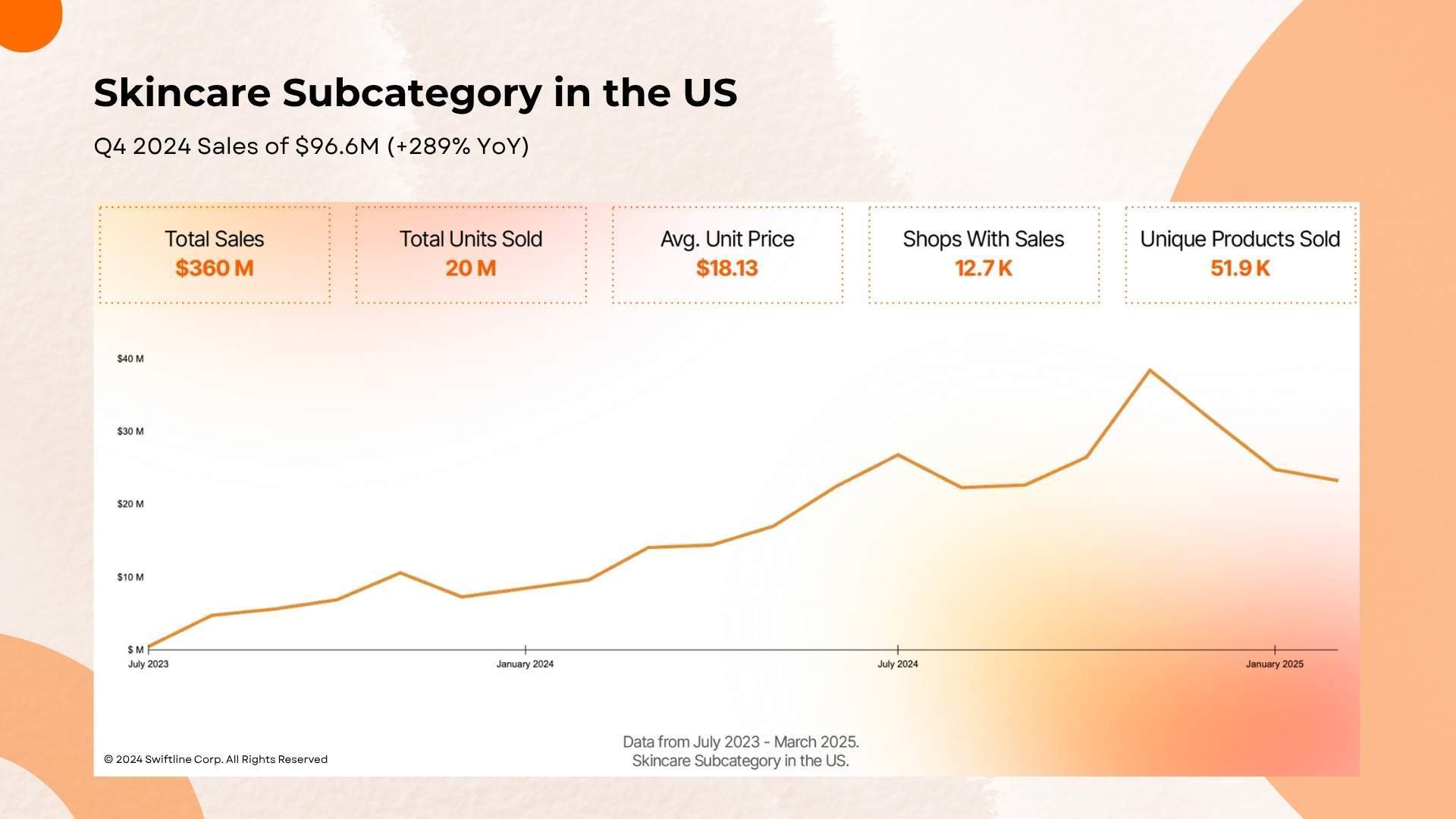
The Charm data proves that the US top skincare brands just wrapped a breakout year. In Q4 2024 alone, skincare sales in the US hit $96.6M, marking a massive +289% year-over-year jump. From July 2023 to March 2025, total sales in the category soared to $360 million.
This wasn’t just hype. It was fueled by 20 million units sold, an average unit price of $18.13, and nearly 52,000 unique products. Here's what that tells us about market behavior and brand opportunity.
Why Skincare Sales Surged
Sales started gaining momentum in mid-2023, gradually rising month over month as consumer interest in skincare products increased. By late summer 2024, the market reached its highest monthly sales point, breaking the $40M mark. This surge in spending wasn't random—it likely coincided with seasonal trends, such as increased sun exposure, travel, and lifestyle shifts that typically drive demand for sun care, hydration products, and skin recovery solutions.
Many top US skincare brands capitalize on this seasonal window with timely product launches, influencer-backed promotions, and limited-edition drops aligned with consumer needs. These brands also leaned heavily into social media to generate urgency and tap into the viral culture dominating platforms like TikTok.
Even after the summer spike, the market showed resilience. Sales dipped from their peak but remained elevated well into Q1 2025. Brands that managed to ride the post-holiday slowdown did so by offering essentials or running evergreen campaigns.
More Brands, More Products, More Competition
Over 12.7K shops contributed to this growth. That’s a crowded shelf by any standard. But what amplified the competition wasn’t just the sheer number of sellers but the overwhelming variety of products. With 51.9K unique SKUs sold, the skincare aisle became a battleground of choice, overwhelming consumers and forcing brands to fight harder for attention.
Shoppers had no shortage of options: serums, cleansers, masks, moisturizers, exfoliants, and everything else. Each product had to cut through the noise, making differentiation essential. Some brands leaned into niche skin concerns. Others emphasized ingredients. Many just hoped to go viral.
US top skincare brands succeeded by doing two things better than most: first, offering targeted, benefit-focused products that solved real problems, like breakouts, dull skin, or dryness. Second, they nailed their visibility game. Whether it was innovative packaging, glowing influencer reviews, or TikTok unboxings, they created moments that made consumers stop scrolling and start buying.
The $18 Price Point: Not Too Cheap, Not Too Luxe
At an average unit price of $18.13, this market is sitting right in the sweet spot. It’s not bargain-bin cheap, and it’s not high-end luxury either. Instead, it lives in a zone consumers trust—affordable enough to try, but pricey enough to feel effective. That’s precisely where most shoppers are most comfortable spending on skincare.
This middle price tier has become the most competitive lane for US top skincare brands. Customers at this level expect quality, but they also expect transparency. Branding matters just as much as formulation. The product might never get picked up if the packaging doesn’t stand out on a TikTok scroll or Instagram shelfie.
Winning products often combine clean aesthetics with ingredient credibility. And because this tier doesn’t price out the average consumer, brands can scale faster without relying on ultra-premium margins. It’s the high-volume, high-trust segment—and right now, it’s where the most significant battles in skincare are happening.
What This Means for Emerging Skincare Brands
This isn’t just about giants like CeraVe or Neutrogena anymore. The presence of nearly 13K shops shows how indie labels are gaining real traction. But breaking through means being intentional about price, product design, and niche targeting.
To compete with the US top skincare brands, newcomers need to lock in one or more of the following:
- A viral marketing hook
- Ingredient transparency
- Eco-conscious packaging
- Problem-specific solutions
Skincare Momentum Is Still Climbing
From $0 to $360M in sales in less than two years, the skincare subcategory is anything but saturated. The data shows a competitive but growing space, where demand is strong and buyers are willing to pay for quality.
Whether you're already one of the US's top skincare brands or you're working to become one, now’s the time to double down on what’s working and stay close to what customers are searching for.
Want to identify the fastest-growing skincare brands by price, product count, or TikTok traction? Book a call with Charm and get the insights before your competitors do.
See what’s trending in your industry
Charm’s Trend Watch is a monthly webinar that shares data and insights into fast-growing DTC brands, TikTok Shop trends, and strategic market opportunities.
Sign up for the Webinar